The Box And 1 Podcast is currently running a give-away in which one person will a pair of HD
headphones, two urban theology books and a signed copy of Andrew Russell’s I Am
That I am EP.
The promotion, which is being run
through rafflecopter.com, begins Wednesday, November 23 and runs for two
weeks through Dec. 6. There are multiple ways to enter the contest through
social media sites like Facebook and Twitter.
More information can be found on
thecrosspromotion.blogspot.com and the Box
And 1 Podcast fan page of Facebook.
Hosted by friends John C Richards,
Jr. Jeremy Hartman and Chris Lassiter, The
Box And 1 Podcast discusses sports, current events and urban culture
through the lens of the gospel.
Richards, the managing director of
the Billy Graham Center for Evangelism, has practiced law and served in vocational
ministry. Author of the book The Tenacity of Hope – one of the
books offered in the give-away - Richards has degrees from Morehouse College,
Howard University School of Law and Fuller Theological Seminary.
Hartman (hartmanbasketball.com)
is a basketball trainer. He coached a high school girls’ basketball team to a
state championship in 2012. Hartman has a master’s degree in educational
administration from the University of Scranton.
Author of the book You’re
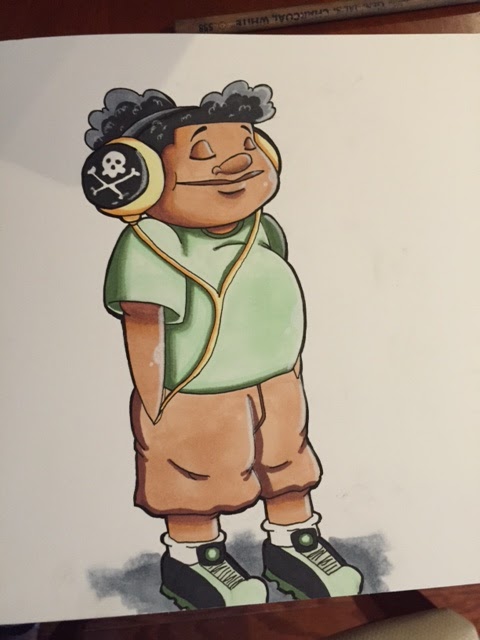
Grounded and the forthcoming book Grits and the Grimels, Lassiter
worked bi-vocationally as a sports reporter and a campus ministry leader.
Hartman and Lassiter were basketball
teammates at a small Division III school in Virginia’s Shenandoah Valley. The
two, who both live in Staunton, VA, remained close friends after their
Shenandoah University hoops careers.
The Box And 1 Podcast is available on the johnrichardsjr.com
Website and in iTunes. The Twitter and Instagram accounts for the podcast can
be found at @boxand1podcast. For interviews or further info., contact Chris
Lassiter at 540-569-0270 or by e-mail at chrislassiter540@gmail.com
Chris Lassiter is a Christ-follower, a husband to Emily (read her blog here), a father to five kids and a freelance writer for Young Life Relationships, HipHopDX.com, JamTheHype.com and other publications. His first book, You're Grounded, was published by Moody Publications in 2013. You can order the book here. His first kids' book, Grits & the Grimels, comes out soon.
At the beginning of 2016, I sent two of my friends an e-mail. I was making my resolutions - because I love resolutions - and I invited them to dream with me. Let's create a podcast that replicates the environment of the neigbhorhood barber shop. Mix in story topics from sports and urban culture. Talk about imporant stuff. Talk about funny stuff. And, most importantly, have those conversations shaped by the gospel.
For a few days, we tossed around ideas. Then, nothing. For the next three months, no podcast talk. Out of the blue, John Richards texted me that he was willing to give it a try. I knew John, aka J-Rich, from The Legacy Conference (a conference I would recommend to everyone), and we had stayed in touch ever since. (Click on John's name and read up on him. He's a super funny guy, a great encouragement and one of the sharpest young theologians I know).
My homeboy Jeremy Hartman (J-Hart), who was my college basketball teammate at Shenandoah University, agreed to give podcasting a try, too. (Click on Jeremy's name to read about his passion for basketball as a teaching tool for all of life). In fact, J-Hart and I did a trial podcast around two years ago. Both J-Hart and I are well under 6-foot tall. Another one of our former teammates, the funniest guy on our squad, suggested we call our podcast "Small Talk." Really funny, Ahmed. Once we had our new podcasting team established, we just needed a name. J Rich is tall, so "Small Talk" wouldn't work (Thanks for trying though, Ahmed). We came up with a bunch of good names, but The Box and 1 Podcast just seemed to stick.
Right now, we're in the infancy stages. Nine episodes deep in a weekly podcast. We have a budget of zero, no advertisers and the most basic of recording equipment. What we do have, however, is humor, ambition, good chemistry and a conviction to help people see things through a gospel lens. Check out the Box And 1 Podcast here or on iTunes and let us know what you think. Chris Lassiter is a Christ-follower, a husband to Emily (read her blog here), a father to five kids and a freelance writer for Young Life Relationships, HipHopDX.com, JamTheHype.com and other publications. His first book, You're Grounded, was published by Moody Publications in 2013. You can order the book here. His first kids' book, Grits & the Grimels, comes out soon.
One
Christian journalist referred to it as “The only Oreo crumb in the cup of
milk.”
The Oreo crumb phrase is in reference to being the only black person in a room full of white people. And, during my time in church and in campus ministry, this has been a regular occurrence for me. On the one hand, it's not that big of deal. What we have in common - the cross of Christ - is so much greater than our skin color that distinguishes us. On the other hand, it can be awkward. And confusing. And uncomfortable.
Sort of like how 1947 was uncomfortable for Jackie Robinson. On April 15, 1947, Robinson broke the color barrier
in Major League Baseball, in large part due to a visionary named Branch Rickey, the Brooklyn Dodgers general manager who helped pave the
way for Robinson.
When the MLB honors Robinson on April 15 this year, roughly 10
percent of the players in the league will be black. The sport is now so
integrated that the Negro Baseball League ceases to exist.
But how did they get there?
And what can churches and campus ministries learn from baseball's integration? I can think of at least four things.
1. Branch Rickey thought things could
change.When no one could imagine one united major league
baseball system, Rickey could. I love Rickey's quote. “I may not be able to do
something about racism in every field, but I can do something about it
baseball.”
We may be not be able to stop all racial division in the body of Christ, but perhaps like Rickey we can change it in our particular sphere of influence.
2.Branch Rickey invested in
multicultural friendships that were deep enough to shape his convictions.
One can only wonder how much of Rickey’s convictions came from befriending his
one-time teammate Charles Follis, the first black professional football
player. Rickey's front row seat to Follis' sub-human treatment created empathy and sympathy in him.
Here's a tough question. Do we have multicultural
friendships so deeply rooted that they help shape our life convictions? If not,
can we really expect the dynamics of the room to change? And what are we willing to
do if those answers are no?
3. Branch
Rickey went scouting the Negro Baseball Leagues. The Boston Red Sox brought in Jackie Robinson first as a politically correct gesture, but Rickey actually went to the Negro League games in order to find a baseball player that
could help integrate baseball.
Rickey had a team of scouts that watched the Negro League players. In other words, he entered another culture and then invited someone from another culture (Robinson) to come integrate baseball. He invested time, money, talent scouts and resources into it, and he was willing to go where it was culturally uncomfortable. If we're not willing to make make similar sacrifices, we're really just paying the idea of a gospel-centered diversity a lip service.
4. Rickey was willing to upset the status quo. Jackie
Robinson was as vilified in 1947 as he is idolized in 2016. The Negro Leagues didn't like losing Robinson as a player, and so no one was on board with it initially. Rickey knew
this would happen. And he knew it would take a player with both Robinson's talent and vision to pioneer the way for other blacks. Let's be honest. When areas diversify,
it creates a whole new set of problems. You have to think through a whole set
of cultural questions that you don’t have to think through in homogeneous
settings. The question then becomes: is it worth it? Is having integrated churches and campus ministries more
God-glorifying, Christ-exalting and more consistent with "on earth as it is in Heaven?" In 2016, we'd find the idea of segregated baseball repulsive. I'm hoping we will find the idea of the church being segregated equally repulsive. That goes for campus ministries, too. Do we really want to see multicultural expressions of the body of Christ in our churches and campus ministries? Would we really love to see it "on earth as it is heaven?" Or are we content with "on earth as it was in the Jim Crow South?" As the world remembers Jackie Robinson, let's let his example remind the body of Christ that what has been isn't what always has to be.
Chris Lassiter is a Christ-follower, a husband to Emily (read her blog here), a father to five kids and a freelance writer for Young Life Relationships, HipHopDX.com, JamTheHype.com and other publications. His first book, You're Grounded, was published by Moody Publications in 2013. You can order the book here. His first kids' book, Grits & the Grimels, comes out this spring.
If you want to find out what you are truly passionate about, get this book. If you don't want to waste your life, get this book. If you need a great recommendation for your 2016 reading list, get this book. If the name Jay Hawkins sounds familiar to you, it's because he's the local operator of the Chick-fil-A in Waynesboro. I've been a journalist for over a decade, but when I met Jay, he was the one asking the questions. And Jay asked great questions. Questions that forced me to ponder answers for hours. When he first told me he was writing a book, I was a bit nervous. By this point in our relationship, I knew Jay had a brilliant mind. But what if his writing genius didn't quite match his business genius? That would be a weird conversation to have in the beginning of a friendship. Fortunately, that wasn't the case. The Pando Principle is a really good quick read. I've read it twice, and I purchased one for my boss and another for my best friend. The book follows a man named Charlie Burns as he watches his father struggle with the idea of retirement. Charlie begins asking himself if he will follow the same path - work a job he didn't love until he was retirement age - or find a different option. With help from the least likeliest of sources, Charlie starts on a journey. Everything Charlie learns on his journey is sure to help you on your own personal journey. If you get The Pando Principle, let me know. I would love to have a book discussion with a group of people who have read the book. There are also resources at thepandoprinciple.com that will help you process what you read. I write these blogs as conversation starters. What books are on your 2016 reading list? What is something in your life you want to change in 2016? Blogger's note: This was an unsolicited book review. I purchased the book myself, and I did not receive any financial compensation for this review.
Chris Lassiter is a Christ-follower, a husband to Emily (read her blog here), a father to five kids and a freelance writer for Young Life Relationships, HipHopDX.com, JamTheHype.com and other publications. His first book, You're Grounded, was published by Moody Publications in 2013. You can order the book here. His first kids' book, Grits & the Grimels, comes out this spring.
Despite things I wish I could change, there are still plenty of reasons to be thankful.
And plenty of people to be thankful for.
As we near Thanksgiving, here's something we can all do to be thankful.
Make a list of people who have believed in you, cared for you, invested in you and have loved you unconditionally. Then find a way to tell them thank you. And not just a generic thank you, but a detailed note that explains why you are so thankful for them in your life.
One final suggestion. Do it in a personal way. A phone call, a handwritten letter, etc. Something that shows you took time and didn't opt for the convenience of a text message. If you are super ambitious, try to do one every day until Thanksgiving.
I write these blogs as conversation-starters. Tell me someone you are thankful to have in your life.
Chris Lassiter is a Christ-follower, a husband to Emily (read her blog here), a father to five kids and a freelance writer for Young Life Relationships, HipHopDX.com, JamTheHype.com and other publications. His first book, You're Grounded, was published by Moody Publications last year. You can order the book here.
As the film opens, Bob Parr is doing what he does best. Serving his community by fighting crime.
However, it's only minutes into the movie when a rescue attempt gone wrong forces Bob out of his super hero gig.
Still, Bob has a wife and kids. And bills have to get paid. Bob takes a job with an insurance company. It's clear that what made him great at being a superhero wouldn't make him a great insurance agent.
Can anyone relate to Bob Parr?
You know you were made to do one thing. However, either responsibilities or circumstances of life force you to do something else. Don't get me wrong. There is absolutely nothing wrong with being an insurance agent ... unless you weren't made to be an insurance agent.
I remember talking to a friend about this topic. He described his Bob Parr situation using a boat illustration. The yacht represented the security of his current job, and his dreams were represented by a raft. In my friend's analogy, he spent every free moment on the yacht trying to make the raft secure enough for him to launch out off of the yacht without drowning.
Maybe that illustrations resonates with you. How do we balance between dreaming big and handling responsibilities? How long should you sell insurance if you were made to be a superhero? This is something me - and a group of my peers - are currently working through. One exercise, recommended to me by a friend, was extremely helpful. I'd encourage you all to try it as well.
First, make a list of life-giving passions in a job. Think of it as things you love to do so much that it doesn't even feel like work. Try to come up with four of five things.
Second, think of any restrictions. For me, those restrictions include geography and ethics. I won't move just anywhere with a wife and kids, and I don't want to work a job where I feel like I have to compromise my ethics.
Third, think of limitations. I'd love to do a job with a bunch of things on my list of passions, but I need to make this much money to take care of my responsibilities. Even if the job was a dream job, I'd have to say no if I couldn't feed my kids.
After working through this list, I had a pretty good idea which jobs best fit me. The friend who introduced me to this exercise wrote a really good book about this, and when it's actually released, I will tell you more about it.
In the meantime, a good resource if the book I recommended in part one of this two-part blog. The book is called What Color is Your Parachute?The book helps you ask yourself a bunch of critical questions, which enable you to determine how you would truly define success. The parachute book then helps you map out a path to your goals.
I write these blogs as conversation starters. I would love to hear from you. What is your dream job? What is stopping you from pursuing your dream job?
Chris Lassiter is a Christ-follower, a husband to Emily (read her blog here), a father to five kids and a freelance writer for Young Life Relationships, HipHopDX.com, JamTheHype.com and other publications. His first book, You're Grounded, was published by Moody Publications last year. You can order the book here.
This is a question we know LeBron James has wrestled through at least twice, as evidenced in his journey from Cleveland to Miami and ultimately back to Cleveland. In fact, the most criticism the NBA's most famous and physically gifted player has faced was for the "I'm taking my talents to South Beach" comment and everything that ensued afterward.
That was a mess!
However, most has been forgiven after 'Bron returned to help the Cavs try for a championship that has eluded the city since the legendary Jim Brown was in the backfield for the Cleveland Browns.
I can sort of relate to LeBron.
Not with the fame, finances, championships or basketball skills. (Maybe the hairline.)
But with the question.
Can I succeed in my hometown?
Like LeBron, I love my hometown. I'm as thankful to have grown up in Staunton as he is to have grown up in Akron. Like LeBron, I have dozens of ideas to leave my city better than I found it. And, just like Cleveland isn't exactly known for winning championships, my city isn't known for a lot of the things I want to achieve.
This is what brought LeBron - as well as me and countless others - to the point of decision.
"Should I be a pioneer in my hometown? Or should I just move wherever I need to move to make sure the dream gets achieved?"
Although I once had dreams of sports achievements, my passion now is more theological. I want to be part of a gospel-preaching, multicultural church. I want to work with urban kids through a faith-based initiative. I want to write a few more books, and I want to create a sports, faith and culture podcast.
And ... I want to feed my kids and pay the mortgage.
Do I have to "take my talents to South Beach?" Or do I try to pioneer those things here?
Ordinarily, this is the part of the blog where you give five points, but this is something I'm still figuring out myself. In addition to praying about it a lot, I've also been helped greatly by a book, What Color is Your Parachute, given to me by a friend at church. The book helps you ask yourself a bunch of critical questions which enable you to determine how you really define success. The book also helps you outline a map to achieve career goals. I write these blogs as conversation-starters. I would love to know how you've wrestled through moving or staying to find success. I also want to know what you've read that has been helpful to you in figuring out your career path.
Chris Lassiter is a Christ-follower, a husband to Emily (read her blog here), a father to five kids and a freelance writer for Young Life Relationships, HipHopDX.com, JamTheHype.com and other publications. His first book, You're Grounded, was published by Moody Publications last year. You can order the book here.